Atacama Desert Circuit
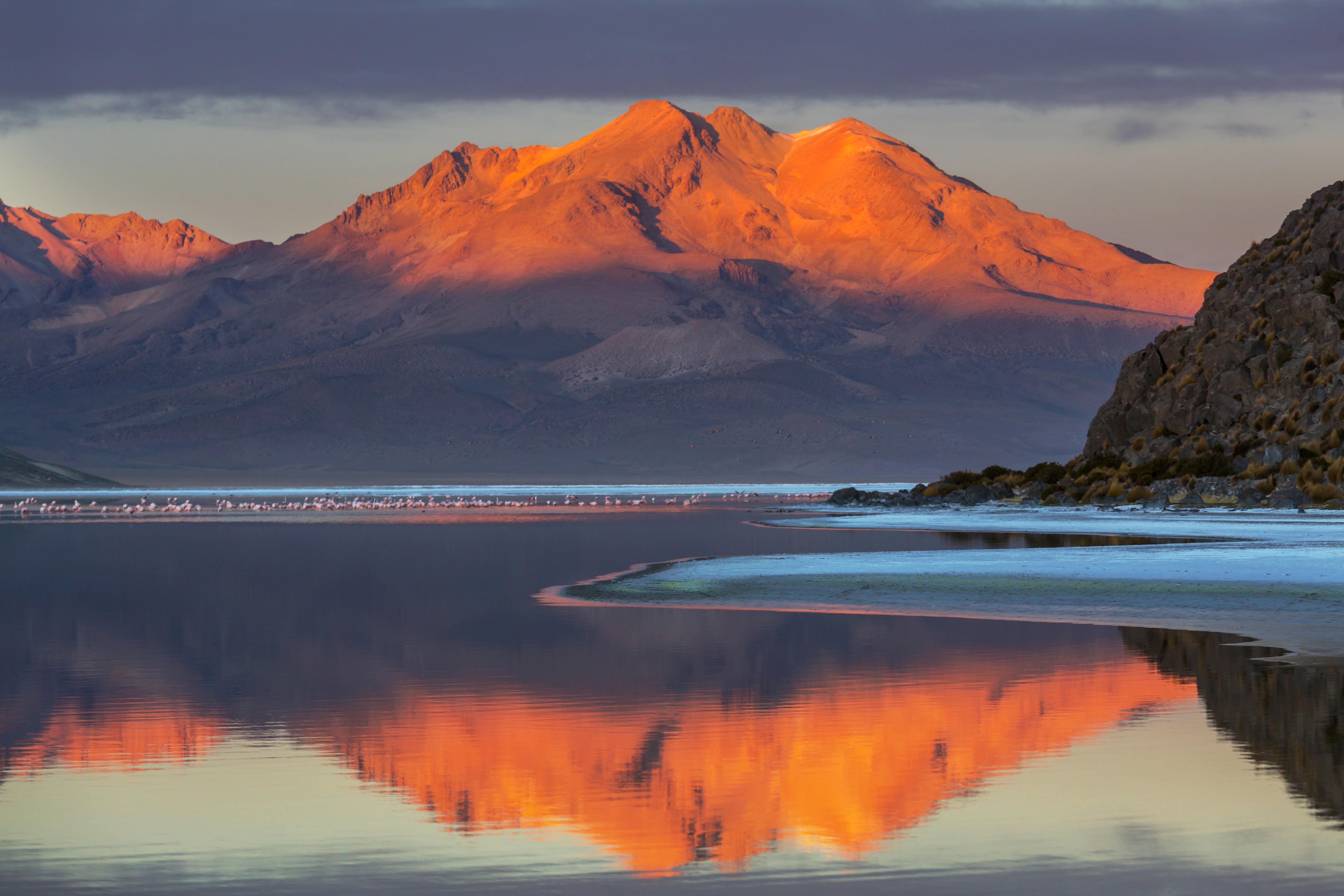
Where Earth Meets the Moon
The Atacama Desert Circuit is a series of day-loops radiating from the oasis town of San Pedro de Atacama through the driest non-polar desert on Earth. This is a landscape of extremes — scorched salt flats stretching to infinity, flamingo-dotted high-altitude lagoons of impossible blue, erupting geyser fields at 14,000 feet, lunar valleys devoid of life, and volcanic cones so perfectly shaped they look computer-generated. Some parts of the Atacama have not received measurable rainfall in recorded history, yet the terrain is anything but monotonous. Each direction out of San Pedro reveals a radically different world: west into moon-white salt canyons and mineral-painted rainbow hillsides, south across the vast Salar de Atacama to turquoise highland lakes, and north up to steaming geysers at dawn. At night, the absence of light pollution and moisture creates what astronomers consider the clearest skies on the planet — the reason Chile built its greatest observatories here. This is driving at the edge of the habitable world.
Key Stops
Western Loop — Valleys, Rainbow Hills & Hidden Lagoons (Full Day)
Valle de la Luna (Valley of the Moon) - Just 10 km from San Pedro, this is the Atacama's most iconic landscape. Jagged salt formations, wind-sculpted ridges, and high sand dunes create a terrain so alien that NASA has used it to test Mars rovers. The sunset viewpoint from the Great Dune is the circuit's most photographed moment, as the entire valley shifts through shades of gold, copper, and violet.
Valle de la Muerte (Death Valley) - Adjacent to Valle de la Luna, this valley of steep sand dunes is a paradise for sandboarding, with slopes ranging from 40 to 200 metres. Far less crowded than its lunar neighbour. Only five minutes from town.
Valle del Arcoíris (Rainbow Valley) - 90 km from San Pedro on the road toward Calama. Among the Atacama's lesser-visited treasures, this valley's hillsides display extraordinary mineral-painted bands of red, beige, green, white, yellow, and violet — the result of millions of years of geological layering. Often described as the most beautiful drive in the region.
Lagunas Escondidas de Baltinache - Reached via a 45-minute dirt road, these eight pristine hidden salt lagoons vary in shape, colour, and texture. Some allow floating in waters with salinity rivalling the Dead Sea. Far fewer visitors than Laguna Cejar, making them feel like a genuine discovery. Entrance fee approximately CLP$10,000.
Southern Loop — Salt Flats & Highland Lakes (Full Day)
Laguna Cejar - A 30-minute drive south from San Pedro leads to this surreal salt lagoon where the salinity is so extreme you float effortlessly, like the Dead Sea. The turquoise water against the blinding white salt crust and distant volcanoes creates an otherworldly scene.
Laguna Tebinquiche - 10 km beyond Cejar, this lagoon offers spectacular sunset reflections. The shallow salt waters turn pink and gold as the sun drops behind the Andes. Many consider this the Atacama's finest sunset spot.
Toconao - A charming oasis village 38 km south of San Pedro, built almost entirely from white volcanic stone (liparite). The bell tower of the Church of San Lucas and the narrow Quebrada de Jere canyon with its orchards and stream are worth exploring.
Salar de Atacama & Laguna Chaxa - Chile's largest salt flat, covering over 3,000 km². Laguna Chaxa within the Reserva Nacional Los Flamencos is the best place in the Atacama to see Andean, Chilean, and James's flamingos feeding in shallow brine pools against a backdrop of distant volcanoes.
Socaire - A remote Atacameño village at 3,500 metres, one of the last settlements before the high altiplano. Known for its pre-Hispanic terraced agriculture still in use today. A good spot for a traditional lunch.
Lagunas Miscanti & Miñiques (Lagunas Altiplánicas) - Approximately 150 km south of San Pedro at 4,000 metres. Two stunningly vivid blue lakes sitting in volcanic craters, framed by the symmetrical cones of Volcán Miscanti and Volcán Miñiques. The deep blue of the water against the rust-red volcanic terrain and snow-dusted peaks is extraordinary.
Piedras Rojas (Red Rocks) - Near the Salar de Aguas Calientes, this surreal landscape features crimson-red rock formations jutting from a turquoise lagoon. The colour contrast is so vivid it barely looks real. One of the Atacama's most awe-inspiring sights.
Northern Loop — Geysers & Hot Springs (Full Day)
El Tatio Geyser Field - 80 km north of San Pedro at 4,320 metres, this is the southern hemisphere's largest geyser field and the world's third largest. Over 80 active geysers erupt at dawn when the freezing air meets superheated steam, creating towering columns of vapour against the rising sun. The spectacle is at its peak between 5:30 and 7:00 am, requiring a 3:30-4:00 am departure from San Pedro.
Machuca - A tiny Atacameño hamlet of around 20 residents on the return road from El Tatio. Locals sell grilled llama skewers and sopaipillas from roadside stalls. The photogenic church and grazing llamas make it worth a brief stop.
Termas de Puritama - 30 km from San Pedro on the return from El Tatio, these natural hot springs cascade through a narrow canyon in eight terraced pools ranging from 28°C to 31°C (82-88°F). After the frigid pre-dawn geyser visit, soaking here is pure bliss.
Night Experience
Stargazing - The Atacama is considered the world's premier stargazing destination. Extremely low light pollution, high altitude, and near-zero humidity create conditions no other inhabited place can match. Multiple observatories and astronomy tours operate from San Pedro. Plan at least one evening around a new moon for the full experience — the Milky Way is visible to the naked eye with jaw-dropping clarity.
Driving Tips
- Fuel up religiously: There is only one fuel station in San Pedro de Atacama — it looks like you're driving into private property off a narrow side street, with a single set of pumps and sometimes long queues. Fill up every time you return to town. No fuel is available anywhere else in the circuit.
- Altitude acclimatisation: San Pedro sits at 2,400 m, but routes climb to 4,000-4,320 m. Spend your first 1-2 days at lower-altitude sites (Valle de la Luna, Rainbow Valley, salt flats) before attempting El Tatio or the highland lakes. Drink plenty of water, avoid alcohol the first day, and eat light meals. Locals recommend chewing coca leaves to ease symptoms.
- El Tatio pre-dawn drive: The 80 km road to El Tatio is unpaved, unlit, has no guardrails, and features steep drop-offs — all navigated in total darkness at 3:30 am. Drive slowly, stay alert for animals on the road, and consider joining a guided convoy if uncomfortable with night driving at altitude.
- Sun and temperature extremes: Daytime temperatures can exceed 30°C (86°F) at lower elevations while dropping below -10°C (14°F) at the geysers before dawn. Layer clothing. UV radiation at altitude is fierce — high-SPF sunscreen, quality sunglasses, and a hat are mandatory.
- Water: The desert air is extraordinarily dry. Carry at least 3 litres of water per person per day. Dehydration exacerbates altitude sickness.
- Offline maps: Mobile signal disappears quickly outside San Pedro. Download offline maps (Google Maps, Maps.me, or Gaia GPS) before departing. Some dirt tracks are poorly signed.
- Entrance fees: Most natural sites (Valle de la Luna, Laguna Cejar, Lagunas Altiplánicas, El Tatio) charge separate entrance fees, typically CLP$3,000-15,000. Carry cash in Chilean pesos — card readers are unreliable in the desert.
- Tyre pressure: Lower your tyre pressure slightly for extended sandy or gravel stretches to improve traction. Re-inflate when returning to paved roads.
- Respect the environment: The Atacama's ecosystems are extraordinarily fragile. Stay on marked roads and trails. Do not approach flamingos closely. Do not touch geyser vents — the water is boiling and the ground crust can be thin.
- For more information visit: Atacama Desert and Altiplano - Chile Travel