The Uruguay Riviera
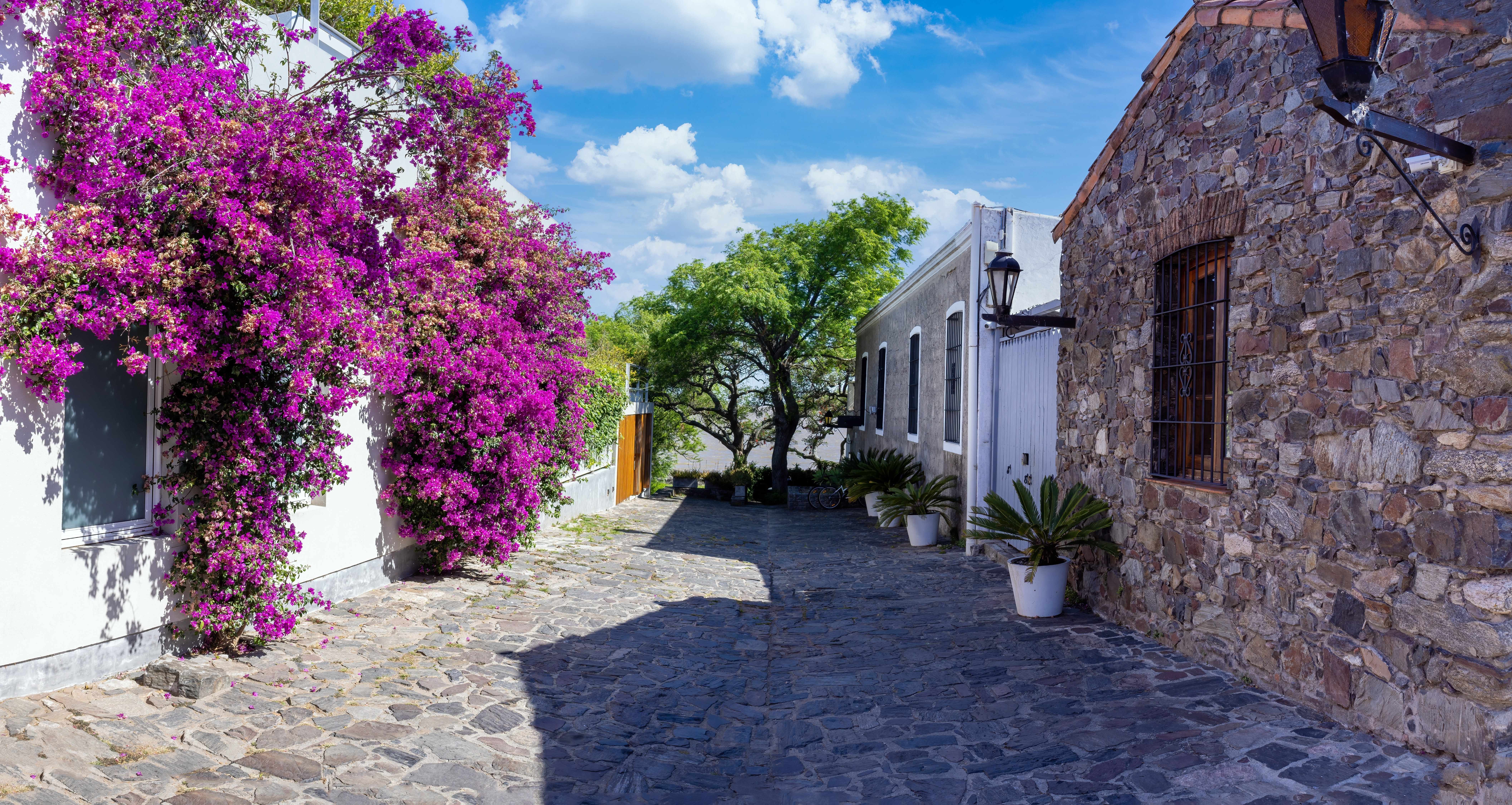
UNESCO Cobblestones to South America's Riviera
Uruguay's entire southern coast unfolds along this 310 km arc from the cobblestoned colonial quarter of Colonia del Sacramento to the glamorous beach peninsula of Punta del Este. Ruta 1 leaves Colonia and crosses gaucho country — flat, green, impossibly peaceful estancia land where cattle and horses outnumber people — before reaching Montevideo, a capital city that somehow combines colonial grandeur, open-fire steakhouses, candombe drum parades, and a 22 km waterfront promenade without ever feeling hurried. East of Montevideo, the Ruta Interbalnearia hugs the coast through a string of beach towns that escalate steadily in sophistication: the pine-bordered sands of Atlántida, the Art Deco nostalgia of Piriápolis, the whitewashed fantasy of Casapueblo clinging to a headland, and finally Punta del Este itself — South America's answer to St. Tropez, where the calm Río de la Plata meets the wild Atlantic. Push 40 km further east and the road reaches José Ignacio, a barefoot-chic fishing village where one of South America's most celebrated chefs cooks over open flames.
Key Stops
Colonia del Sacramento Uruguay's oldest city, founded by the Portuguese in 1680 and fought over by Portugal and Spain for a century. The Barrio Histórico — a UNESCO World Heritage Site since 1995 — is a labyrinth of original 17th-century cobblestone streets, pastel-washed colonial houses, and crumbling stone walls draped in bougainvillea. Walk the iconic Calle de los Suspiros (Street of Sighs), climb the 1857 lighthouse built on the ruins of a Franciscan convent for panoramic views across the Río de la Plata to the Buenos Aires skyline, and wander the tree-shaded Plaza Mayor. Most visitors arrive by high-speed ferry from Buenos Aires (1 hour via Buquebus or Colonia Express), making this a natural starting point for any Uruguayan road trip.
Carmelo The heart of Uruguay's boutique wine country, where eight family-owned vineyards sit within cycling distance of each other in the gentle countryside near the confluence of the Uruguay and Paraná rivers. Tannat — Uruguay's flagship grape, a bold blue-black varietal brought by French Basque settlers — thrives in the clay-rich soils. Bodega Narbona, founded in 1909, operates as a Relais & Châteaux wine lodge with a creamery, bakery, harbour, and private beach. The town's landmark is an orange-painted manual swing bridge over the Arroyo de las Vacas. Carmelo rewards those willing to slow down.
Montevideo Uruguay's laid-back capital (metro pop. ~1.8 million) is a city best absorbed at walking pace. In the Ciudad Vieja, colonial buildings line Boulevard Sarandí alongside galleries and cafés. The Mercado del Puerto — a magnificent 1868 iron-and-glass market hall — is a temple of Uruguayan asado, with whole carcasses sizzling over open-fire parrillas while tango plays from tinny speakers. The Palacio Salvo, an eclectic 1920s skyscraper with an improbably top-heavy tower, was once the tallest building in South America. The neoclassical Teatro Solís (1856), modelled after La Scala, hosts opera and concerts in a 1,500-seat auditorium.
Then there is the Rambla — a 22 km uninterrupted waterfront promenade running the city's entire coastline, one of the longest in the world. It passes a sequence of urban beaches — Ramírez, Pocitos, Buceo, Malvín, Carrasco — each with its own character, from the hip young crowds at Pocitos to the elegant mansions of Carrasco. On any given afternoon, the entire city seems to be out walking, cycling, sipping mate, or watching the sun drop into the Río de la Plata.
Montevideo is also the birthplace of Candombe — Afro-Uruguayan drumming and dance inscribed on UNESCO's Intangible Heritage list — and hosts the world's longest carnival (late January through February), climaxing in the Desfile de Llamadas, a thunderous parade of drumming groups through the Barrio Sur.
Atlántida (km 225) A relaxed resort town on the Costa de Oro (Gold Coast), bordered by pines and split between calm and surf beaches. Architecture enthusiasts should seek out the Cristo Obrero Church, designed by the visionary Uruguayan engineer Eladio Dieste — its undulating brick walls and roof are a masterwork of structural innovation that draws architects from around the world.
Piriápolis An Art Deco-tinged seaside resort built in the 1930s by the entrepreneur Francisco Piria. The centrepiece is the monumental Argentino Hotel — a 120 m-long, six-storey beachfront palace that once accommodated 1,200 guests. Its saltwater thalassotherapy pools and thermal spa remain open to visitors. Take the vintage aerosilla (cable car) up Cerro San Antonio for panoramic coastal views. Piriápolis has the charm of a resort that peaked a century ago and is perfectly content about it.
Casapueblo, Punta Ballena (km 297) The extraordinary creation of Uruguayan artist Carlos Páez Vilaró (1923–2014) — a whitewashed, 13-storey "habitable sculpture" of flowing, organic forms built without plans over 36 years, beginning in 1958 with a wooden box made from beach planks. Vilaró compared it to the mud nest of the hornero bird, Uruguay's national symbol. Today it houses a museum, hotel, gallery, and café. Every afternoon since 1994, a sunset Ceremonia al Sol is held on the terraces — a recorded message from Vilaró accompanying the sun's descent into the Río de la Plata. The building, glowing white against the ocean, is one of the most photographed landmarks in Uruguay.
Punta del Este South America's premier beach resort, built on a narrow peninsula where the Río de la Plata meets the Atlantic Ocean. The western Playa Mansa offers flat, calm water for families; the eastern Playa Brava brings powerful Atlantic surf. Between them, embedded in the sand on Brava, stands La Mano — five giant concrete fingers emerging from the beach, sculpted by Chilean artist Mario Irrarrázabal in 1982, originally as a warning about dangerous currents, now the city's most iconic photo opportunity.
The port mixes working fishing boats with superyachts. Offshore, Isla de Lobos — 8 km southeast — holds the largest South American sea lion and fur seal colony in the western hemisphere (~200,000 animals) and South America's tallest lighthouse (59 m). In season (December–February), Punta del Este's restaurant scene, nightlife, and people-watching rival anything on the European Riviera.
José Ignacio A former fishing village 40 km east of Punta del Este that has become one of South America's most coveted boutique destinations — all dirt roads, wide dunes, a century-old lighthouse, and barefoot elegance. The legendary Argentine chef Francis Mallmann put José Ignacio on the gastronomic map; his current venture Chiringuito is on Route 10, while his flagship Restaurante Garzón occupies a revived 19th-century railway village 30 minutes inland, alongside the world-class Bodega Garzón winery. José Ignacio's wide, unspoiled beach — watched over by the old lighthouse — is the reward for driving to the very end of the Riviera.
Driving Tips
- Headlights on at all times. It is a legal requirement on all highways and inter-city roads in Uruguay, 24 hours a day.
- Tolls are cashless. Uruguay eliminated cash payments at toll plazas in 2024. Rental cars are typically registered with the automatic SUCIVE licence-plate billing system — confirm this when collecting your vehicle.
- Fill up before detours. Fuel stations are well-spaced on Ruta 1 and the Interbalnearia, but backroads to wineries in Carmelo or the countryside may be far from the nearest pump.
- Gravel detours after rain. Rural roads to wineries and estancias can deteriorate significantly when wet. Drive slowly and check conditions locally.
- Summer traffic. December to February brings heavy holiday traffic, especially on the Interbalnearia between Montevideo and Punta del Este. Friday evenings (outbound) and Sunday evenings (return) are the worst. Leave early or travel midweek.
- Carry your passport and driving licence (an international driving permit is recommended). Police checkpoints exist.
- Speed enforcement. Limits are 45 km/h in towns, 90 km/h on rural roads, 110 km/h on highways. Radar is used.
- For more information visit: guruguay.com