The Illinois Northwest

The Driftless Country: Galena's Hills and the Upper Mississippi Bluffs
The Illinois Northwest passes through the Driftless Area, a 24,000-square-mile region of northwestern Illinois, southwestern Wisconsin, and northeastern Iowa that was completely missed by the Pleistocene ice sheets. While glaciers flattened the rest of the upper Midwest, the Driftless kept its pre-glacial topography: deep valleys, 400-foot limestone bluffs, hidden hollows, and rolling folded farmland unlike anywhere else east of the Rockies. The drive's centerpiece is Galena, a 19th-century lead-mining boomtown that supplied 80 percent of US lead at its peak (1845), shipping 27,000 tons that year alone (more than the rest of the world combined). When the mines played out, the river silted up, and the railroads bypassed it, Galena was abandoned to time. Today 85 percent of its buildings are on the National Register, and the entire downtown is a National Historic Landmark District. Ulysses S. Grant lived here before and after the Civil War. From Galena, the byway climbs the historic Stagecoach Trail through Illinois's highest country (Charles Mound at 1,235 feet), drops into Apple River Canyon, then follows the Great River Road south along Mississippi bluffs to Mississippi Palisades State Park, the Dutch heritage village of Fulton, and the Quad Cities. The Mississippi here is part of the Upper Mississippi River National Wildlife and Fish Refuge, one of America's most important migratory bird corridors, hosting hundreds of wintering bald eagles below the lock-and-dam tailraces from December through February.
Key Stops
East Dubuque (Start) A small Illinois town across the Mississippi from Dubuque, Iowa, founded as Dunleith in 1853 and renamed in 1879. The town has several good restaurants and the Julien Inn. From here, US-20 climbs onto the bluffs heading east toward Galena.
Galena The drive's centerpiece, founded in 1826 as a lead-mining boomtown when Galena (Latin for "lead") was the largest source of lead in the United States, supplying 80 percent of US production at its peak. By 1845, Galena had over 14,000 residents (more than Chicago) and was the busiest port on the upper Mississippi. The bust came rapidly: mines played out by the Civil War, the Galena River silted up to the point that steamboats could no longer reach the town, and railroads bypassed it. The town was simply abandoned to time. Today, 85 percent of buildings are on the National Register of Historic Places, and the entire downtown is a National Historic Landmark District. Key sites:
- Main Street, a 6-block stretch of restored 1830s–1860s storefronts now occupied by 125+ shops, galleries, antique stores, restaurants, and inns. No chain stores allowed.
- DeSoto House Hotel (1855, the "largest hotel in the West" when built; Abraham Lincoln gave a speech from its second-floor balcony in 1856; Grant ran his 1868 presidential campaign from a third-floor office; Mark Twain, Susan B. Anthony, Stephen Douglas, and William Jennings Bryan all stayed here; still operating)
- Galena History Museum (in the 1858 Daniel Barrows mansion) with extensive exhibits on Galena's mining era, the steamboat trade, and Grant's life. Don't miss Thomas Nast's painting Peace in Union depicting Grant's surrender of Lee's army at Appomattox.
- Old Market House (1845), the oldest market house in the Midwest
- Dowling House (1826), Galena's oldest existing building, built of locally quarried limestone
- Ulysses S. Grant Home (1865 Italianate-style brick, presented to Grant by Galena citizens upon his return from the Civil War; preserved by Grant's family with original furnishings)
- Belvedere Mansion (1857, 22-room Italianate, often called the most beautiful house in Galena)
- Vinegar Hill Lead Mine and Museum (6 miles north of town), an actual lead mine where descendants of the original 1822 owner give hard-hat tours of the underground workings
Galena is also famous for its concentration of bed-and-breakfast inns (more than 50 in town and the surrounding countryside), wineries (Galena Cellars Vineyard), resorts (Eagle Ridge Resort, 4 golf courses including the General, one of the top-rated public courses in Illinois), and seasonal events including the Halloween Parade, Tour of Historic Homes (June), and Christmas in the city.
Scales Mound A tiny village (population approximately 400) entirely listed on the National Register of Historic Places, with restored 1860s frame houses and the Warren Community Building. Named for the Scales family who farmed here in the 1830s.
Charles Mound (Highest Point in Illinois) Two miles northeast of Scales Mound, Charles Mound rises to 1,235 feet, the highest natural point in Illinois (the entire state is largely flat farmland; this Driftless ridge holds the elevation record). The summit is on private farmland but is generally open to visitors on the first weekend of each month from April through October (no fee; respect the landowner's hours and rules). The Mound is a popular destination for "highpointers" pursuing the highest point in each state. Drive the 0.75-mile farm lane and walk the short trail to the summit marker.
Apple River Canyon State Park A 297-acre park hidden in a deep limestone canyon carved by the Apple River. The park preserves a pre-glacial landscape: cool, north-facing canyon walls support relict ferns and rare plants (including bird's-eye primrose, growing from rock crevices) that survived the Ice Age in this Driftless refugia. Five miles of hiking trails, a campground, and excellent trout fishing (Apple River is one of the few cold-water streams in Illinois). Free park entry.
Long Hollow Scenic Overlook Two miles west of Elizabeth on US-20, a pagoda-style stone tower (built in 1937 by the Civilian Conservation Corps) provides one of the best public views of the Driftless landscape: rolling green hills folding away into the distance, dotted with red barns, white farmhouses, and tall grain silos. On clear days, Charles Mound is visible to the northeast and the Mississippi Valley to the west.
Hanover and Whistling Wings Hanover, on IL-84 south of Galena, calls itself the "Mallard Capital of the World" for the Whistling Wings duck hatchery, the largest commercial mallard duck hatchery in the world (over 200,000 ducks raised annually for hunting clubs, restoration projects, and stocking). The hatchery offers self-guided tours through a viewing window into the ducklings' barn (free, donations welcomed).
Mississippi Palisades State Park A 2,500-acre park where 300-foot limestone bluffs rise sharply from the Mississippi River, named for their resemblance to the Hudson River's Palisades. Thirteen miles of trails wind along the bluff tops and through the bottomlands, with views west across the Mississippi to Iowa. The park preserves Indian Head, Twin Sisters, and Sentinel Rocks, and includes prehistoric burial mounds. Spring offers spectacular wildflower displays and morel mushroom hunting (in season); fall brings spectacular foliage. Rock climbers occasionally scale the bluffs from below. Free entry; camping available.
Savanna and the Savanna-Sabula Crossing Savanna is a working river town with the historic Hotel Manor (1932), several restaurants, and access to the Savanna Army Depot National Wildlife Refuge (a former WWII munitions storage facility now restored as habitat for migratory birds). The Savanna-Sabula Bridge crosses the Mississippi to the tiny island town of Sabula, Iowa (population approximately 500, the only "island city" in Iowa). The original 1932 erector-set-style truss bridge was replaced in 2017 with a modern span.
Lock and Dam No. 13 At Fulton, Lock and Dam No. 13 is one of 29 locks built by the US Army Corps of Engineers between Minneapolis and St. Louis to convert the Mississippi into a year-round commercial waterway. The lock has the largest single navigation pool on the Upper Mississippi at 30,000 acres. A visitor observation platform offers excellent views of barges "locking through" (a 1,200-foot tow of 15 barges takes about 90 minutes to lock through). The dam keeps the water below open year-round, attracting hundreds of wintering bald eagles to fish the tailrace; eagle viewing is exceptional December through February.
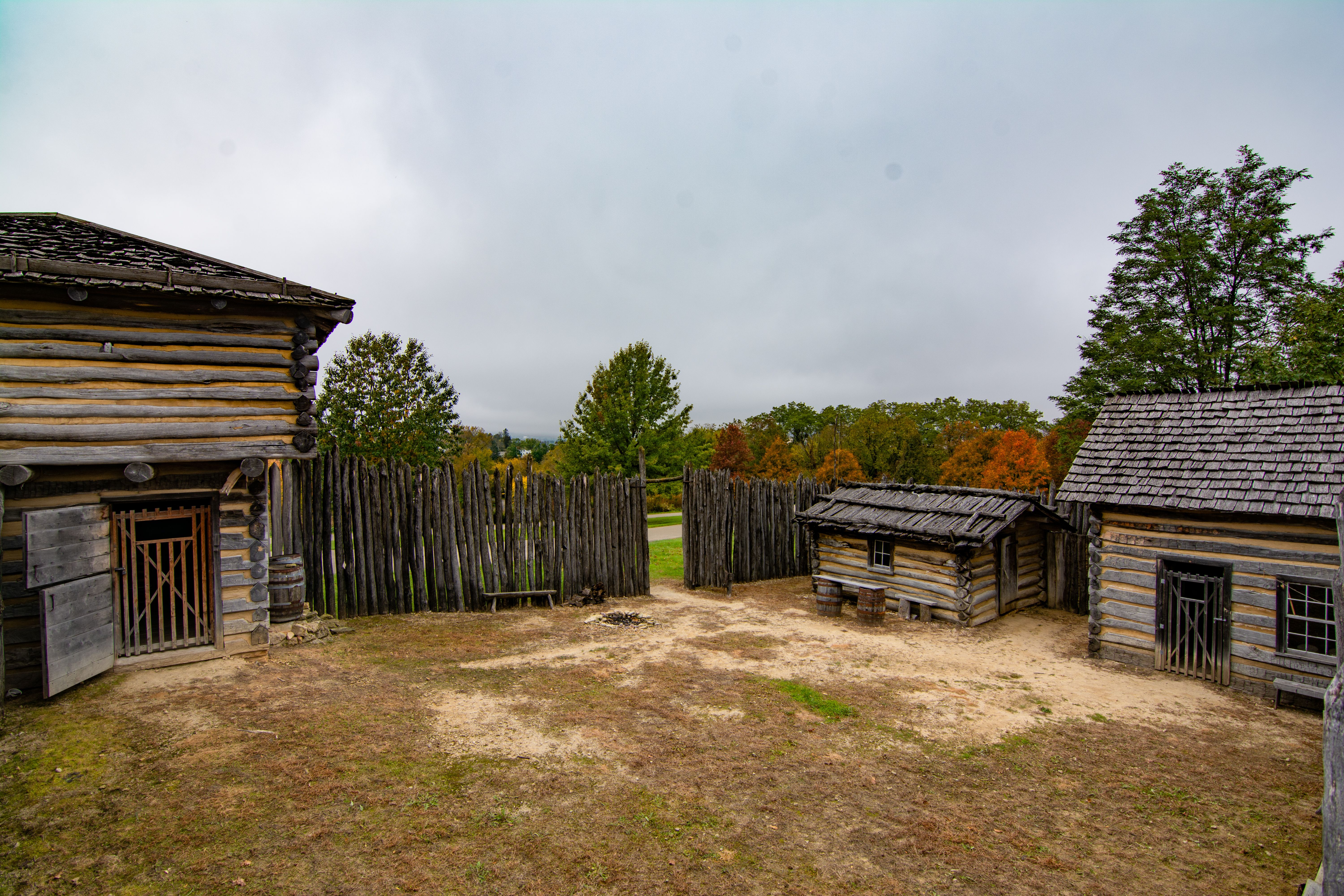
Fulton A small Mississippi River town named for steamboat inventor Robert Fulton, with a rich Dutch heritage from 19th-century immigrants. The town's defining landmark is De Immigrant, an authentic working Dutch windmill installed in 2000 (built in the Netherlands and shipped to Fulton in pieces; the only operating authentic Dutch grain windmill in Illinois). The mill grinds wheat and corn into flour sold on-site. Adjacent is Windmill Cultural Center with exhibits on Dutch-American heritage. The town hosts the Dutch Days Festival the first weekend of May. The riverside also features Heritage Canyon, a recreated 1800s pioneer village with a blacksmith shop, one-room schoolhouse, and chapel, all built into a former limestone quarry.
Port Byron A small steamboat-era river town founded in 1828. Famous as the host of the annual Mississippi River Tug Fest (held every August), in which teams from Port Byron, Illinois, and LeClaire, Iowa, pull on opposite ends of a 2,400-foot rope stretched across the Mississippi in a tug-of-war that lasts roughly 9 minutes. The only river tug-of-war in the world. The event draws thousands of spectators.
Rapids City (Southern End) The drive's southern terminus and the gateway to the Quad Cities (Rock Island and Moline in Illinois, Davenport and Bettendorf in Iowa), the largest metropolitan area on the Mississippi between St. Louis and the Twin Cities (population approximately 380,000). From Rapids City, IL-84 continues into Moline and Rock Island for additional exploration:
- John Deere Pavilion in Moline (the world headquarters of John Deere; the exhibit hall displays vintage and current Deere equipment, free)
- Rock Island Arsenal, the largest government-owned weapons manufacturing arsenal in the United States (on a Mississippi River island; a public access museum operates with photo ID and security check)
- Black Hawk State Historic Site in Rock Island, preserving the original 1830s village of Saukenuk (largest village of the Sauk Nation, led by Chief Black Hawk, whose 1832 attempt to return to his ancestral home triggered the Black Hawk War)
- Bald Eagle viewing below Lock and Dam No. 15 at Rock Island, one of the largest concentrations of wintering eagles on the Upper Mississippi
Driving Tips
- The drive is well-paved two-lane highway throughout, with gentle to moderate hills and curves through the Driftless section. Easy for any vehicle.
- Galena is the centerpiece. Plan at least one full day, ideally an overnight, to walk Main Street, tour Grant's home, and dine at the historic inns and restaurants. Lodging fills well in advance on summer weekends and during October (peak foliage) and the Christmas Walk season (late November through December).
- Best driving direction: East from Dubuque through Galena and the Stagecoach Trail, then south down the Mississippi. This puts the Driftless interior first and finishes with the river bluffs, mimicking the historical progression from mining-era Galena to the steamboat era of the Mississippi.
- Charles Mound is on private land and is generally accessible only the first weekend of each month from April through October. Confirm dates and access protocols before visiting; the route is a working farm and visitors must respect the owner's rules.
- Fall foliage peaks mid-October in the Driftless. The Stagecoach Trail and Mississippi Palisades are particularly spectacular.
- Winter eagle viewing is best at Lock and Dam No. 13 (Fulton) and Lock and Dam No. 15 (Rock Island/Davenport). Peak numbers in late January and early February. The Quad Cities Bald Eagle Days in mid-January is the largest eagle-watching festival in the region.
- The Great River Road segment (IL-84 from Galena south) is itself a designated National Scenic Byway and offers continuous Mississippi River views. Several pullouts offer photo opportunities.
- Cell coverage is reliable in Galena, Savanna, Fulton, and Rock Island/Moline, but spotty along the Stagecoach Trail and Apple River Canyon area. Download offline maps.
- Fuel up in East Dubuque, Galena, Savanna, Fulton, and Port Byron. The Stagecoach Trail has very limited services.
- Galena and many of the historic towns have walking-tour maps available at visitor centers. Park once and explore on foot whenever possible.
- The De Immigrant Dutch Windmill in Fulton operates with seasonal hours; flour grinding demonstrations typically Saturday mornings from spring through fall. Verify hours before visiting.
- Galena's main bridges and roads can flood during high-water spring conditions on the Galena and Mississippi Rivers. Check current conditions if visiting in March or April.
- For more information visit: Visit Galena