The Archipelago Trail

Finland's Island-Hopping Ring Road Through the Archipelago Sea
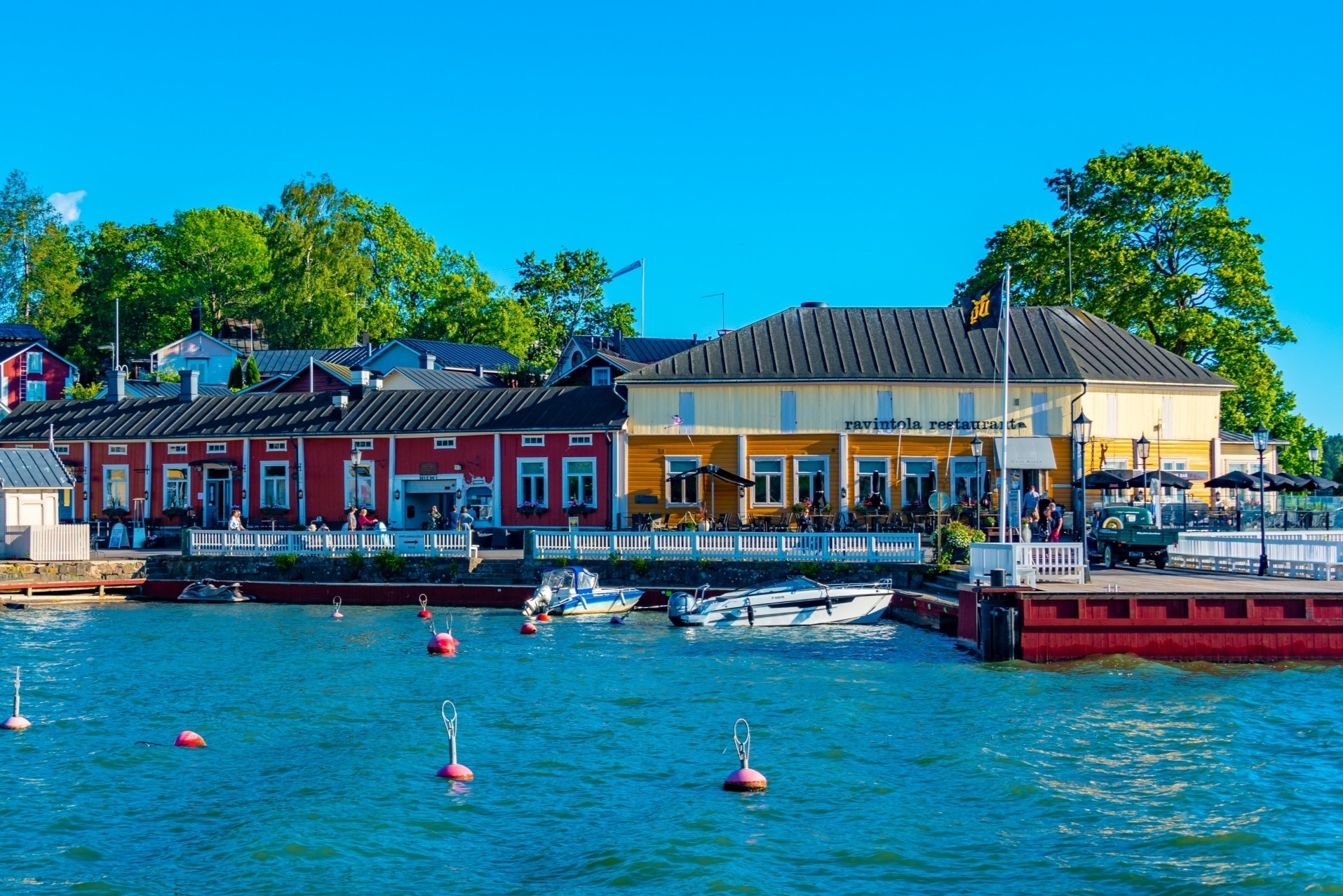
The Archipelago Trail is a 155-mile loop through the Archipelago Sea of southwest Finland, a maze of some 20,000 islands and skerries scattered between Finland and Sweden, their granite backs rounded smooth by the last ice age. Established as an official tourist route in 2001, the trail links the major inhabited islands with twelve bridges and eight ferry crossings, so the drive alternates between quiet forest roads and open-deck sea passages where your car rides between islands past cormorant-lined rocks, seals, and white-tailed eagles. The route begins and ends at Turku Cathedral, Finland's national shrine, whose noon bells are broadcast daily on national radio. From there it rolls through a bilingual Finnish-Swedish island culture of red wooden villages, medieval stone churches, and summer harbors. The scenery builds as you go: lush farmland near the mainland gives way to bare, wind-scoured outer islands before the loop swings north and returns through Naantali, Finland's prettiest wooden town.
Key Stops
Turku. The traditional start and finish, and Finland's oldest city. See the 13th-century cathedral and Turku Castle, and stroll the restaurant-lined Aura riverfront. Last full city services before the islands; the loop officially begins at the cathedral steps.
Pargas (Parainen). The gateway to the archipelago, reached on Rte 180 south of Kaarina. An attractive old wooden quarter sits beside one of the Nordic region's largest open-pit limestone quarries, with a viewpoint over the vast white terraces. Good place to top up fuel and groceries.
Nagu (Nauvo). The liveliest stop on the trail, reached by a free cable ferry from Pargas. The guest harbor buzzes all summer with sailboats, waterfront restaurants, and ice-cream queues; the village's medieval stone church dates from the 15th century. The best overnight base for a two-day loop.
Korpo (Korppoo). A second short ferry hop from Nagu. Quieter and greener, with a stone church from the late 13th century and a small arts scene. At Galtby harbor, follow the brown trail signs onto the ferry toward Houtskär.
Houtskär. The heart of the Swedish-speaking outer archipelago. The village of Näsby has a charming wooden church and a small archipelago museum; the surrounding lanes pass windmills, boathouses, and sheep pastures. From here the route chains together several short ferry crossings northward.
Mossala-Dalen Ferry. The longest and most scenic crossing on the route, and the seasonal link that makes the full loop possible. Watch for white-tailed eagles (the emblem bird of the archipelago) and seals in open water. Unlike the free yellow road ferries, this connection charges per vehicle and runs only in summer; check the timetable before committing to the northern half.
Iniö. A miniature island municipality of around 200 year-round residents, dominated by the stone Sofia Wilhelmina Church. A good slow-lunch stop before the cable ferry onward to Jumo and the Kustavi road.
Kustavi. Back toward the mainland on Rte 192, famous for roadside smoked-fish stands, summer boutiques, and busy marinas. From here the archipelago's bare rock softens back into farmland.
Taivassalo. A mainland farming parish with a medieval stone church known for its frescoes and an archipelago visitor center near the harbor.
Naantali. The finale: a beautifully preserved old town of wooden lanes curving around a convent church and yacht harbor. Kultaranta, the Finnish president's summer residence, sits across the bay, and Moominworld theme park occupies its own island, which explains why half the cars in town carry children. From Naantali it's a 20-minute drive on Rte 189 back to Turku.
Driving Tips
The full loop is strictly seasonal. The northern ferry link (Houtskär to Iniö) operates only from roughly June to August. Outside those months, drive the shorter "Small Archipelago Trail" variant instead, or do the Pargas to Houtskär leg as an out-and-back.
Check ferry timetables before setting out. The yellow road ferries (lossi) are free, part of the public road network, and run frequently, but the longer scheduled crossings run to timetables. Missing the northern link can strand you for hours or force a full backtrack.
Drive it counterclockwise (Pargas first). The scenery builds gradually toward the outer islands, and you finish with Naantali's old town as the reward. Clockwise works fine if you'd rather knock out the long northern crossings early.
Two days, not one. The distance looks trivial, but ferry waits, slow island roads, and constant photo stops add up. The classic split is an overnight in Nagu, Korpo, or Houtskär; book well ahead for July, as island rooms are few.
Fuel up on the mainland. Fill the tank in Turku or Pargas; stations on the outer islands are sparse, unstaffed, or seasonal..
Watch for wildlife. Deer and moose are common, and both swim between islands, so they can appear on the road right off a beach. Most active at dawn and dusk; Finnish summer nights are bright, but slow down in low light anyway.
Time your trip midweek or early season. July weekends bring ferry queues at the busiest crossings. June and August offer the same light and open ferries with a fraction of the traffic.
Pair the drive with Turku and Naantali time. A day in Turku's museums and river restaurants before the loop, and an unhurried afternoon in Naantali's old town after it, turn the drive into a proper 3 to 4 day southwest Finland trip.
For more information visit: The Archipelago Trail – Visit Turku & Archipelago