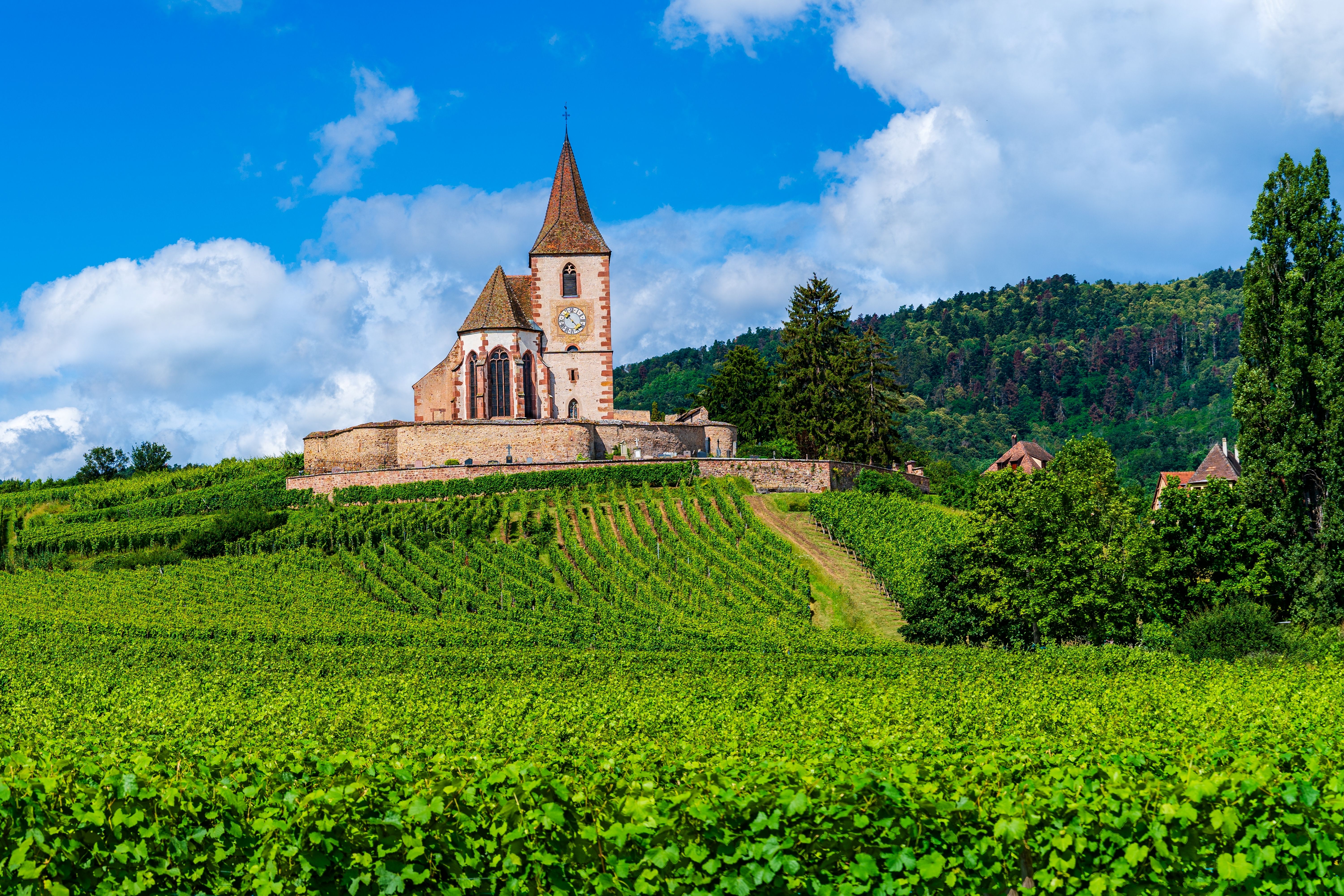
The Alsace Wine Route

A Journey Through France's Premier Wine Country
Winding through the sun-drenched foothills of the Vosges Mountains, The Alsace Wine Route offers an enchanting journey through one of France's most celebrated wine regions. Home to 50 grands crus, the Alsace vineyards stretch across a picturesque landscape of flower-decked villages, medieval ramparts, and timber-framed houses that seem lifted from a fairytale.
Key Stops
Colmar - Your starting point and gateway to the wine route. Take the D417 west to begin your journey.
Wintzenheim - First village on the route where you turn north onto the minor road crossing the River Fecht.
Turckheim - Enter the wine route through one of three medieval gateways in this quintessentially Alsatian village, featuring charming stone houses and bell towers typical of the region's architecture.
Niedermorschwihr - A tiny, flower-decked gem producing the renowned Grand Cru Sommerberg. Walking trails thread through the surrounding vineyards, perfect for stretching your legs.
Katzenthal - A small village celebrated for its exceptional Rieslings. Follow the road in an east-west loop from Niedermorschwihr.
Ammerschwihr - A wine lover's paradise with 50 wineries, including those using organic production methods. Home to the latest grand cru, Kaefferkopf.
Kaysersberg - Birthplace of missionary doctor Albert Schweitzer, this woodland village offers a blend of history and natural beauty nestled in the forest.
Riquewihr - A 16th-century walled town and absolute must-see (detour via D3). Colorful timbered houses line cobbled alleyways, and the aroma of winemaking fills the air. Sample local wines in one of the many traditional winstubs.
Ribeauvillé - A medieval town perched on a south-facing slope dotted with castle ruins. Known for excellent restaurants and classic Alsatian wines.
Bergheim - A charming village with a cobbled square that hosts a lively market every Wednesday—perfect for picking up local produce and souvenirs.
St.-Hippolyte - Medieval ramparts overlook this picturesque village, gateway to the spectacular Chateau du Haut-Koenigsbourg.
Chateau du Haut-Koenigsbourg - Commanding magnificent views across Alsace to the Rhine River, this spectacular castle was rebuilt by Kaiser Wilhelm II between 1900-1908 in 15th-century style. A must-visit highlight of the route.
Orschwiller - Home to a small wine museum where you can learn about the region's winemaking heritage.
Scherwiller - A Riesling-producing village famous for the annual Sentier Gourmand (Gourmet Path) in September—a 4-mile walking experience with food and wine tastings from local producers.
Dambach-la-Ville - One of the old commune wine villages along the northern stretch of the route, steeped in tradition.
Ottrott - Unique among Alsace villages for producing red wine from Pinot Noir grapes, a departure from the region's famous whites.
Rosheim - Your journey ends at this historic commune, home to the Maison Païenne (Pagan House) dating from 1170—possibly the oldest domestic dwelling in all of Alsace.
Driving Tips
- Follow the Yellow Signs - Look for yellow Route du Vin signposts with bunches of grapes that guide you along the designated wine route
- Key Road Transitions - From Colmar, take D417 west to Wintzenheim, then follow N415 north to Kaysersberg before turning east on D28 and joining the D1B northward
- Riquewihr Detour - Turn off the D1B onto the D3 to visit the walled town of Riquewihr; rejoin the D1B to continue north
- Parking in Villages - Many medieval villages have narrow streets; look for designated parking areas on the outskirts and explore on foot
- Avoid Rush Hours - The route is popular with tourists; start early morning or late afternoon to avoid congestion in peak season
- Fuel Up in Colmar - Fill your tank before departing; petrol stations are sparse in the smaller wine villages
- Best Season - April through October
- For more information visit: vinsalsace.com