Snowdonia Mountain Drive
Through the Mountains of Poets and Kings
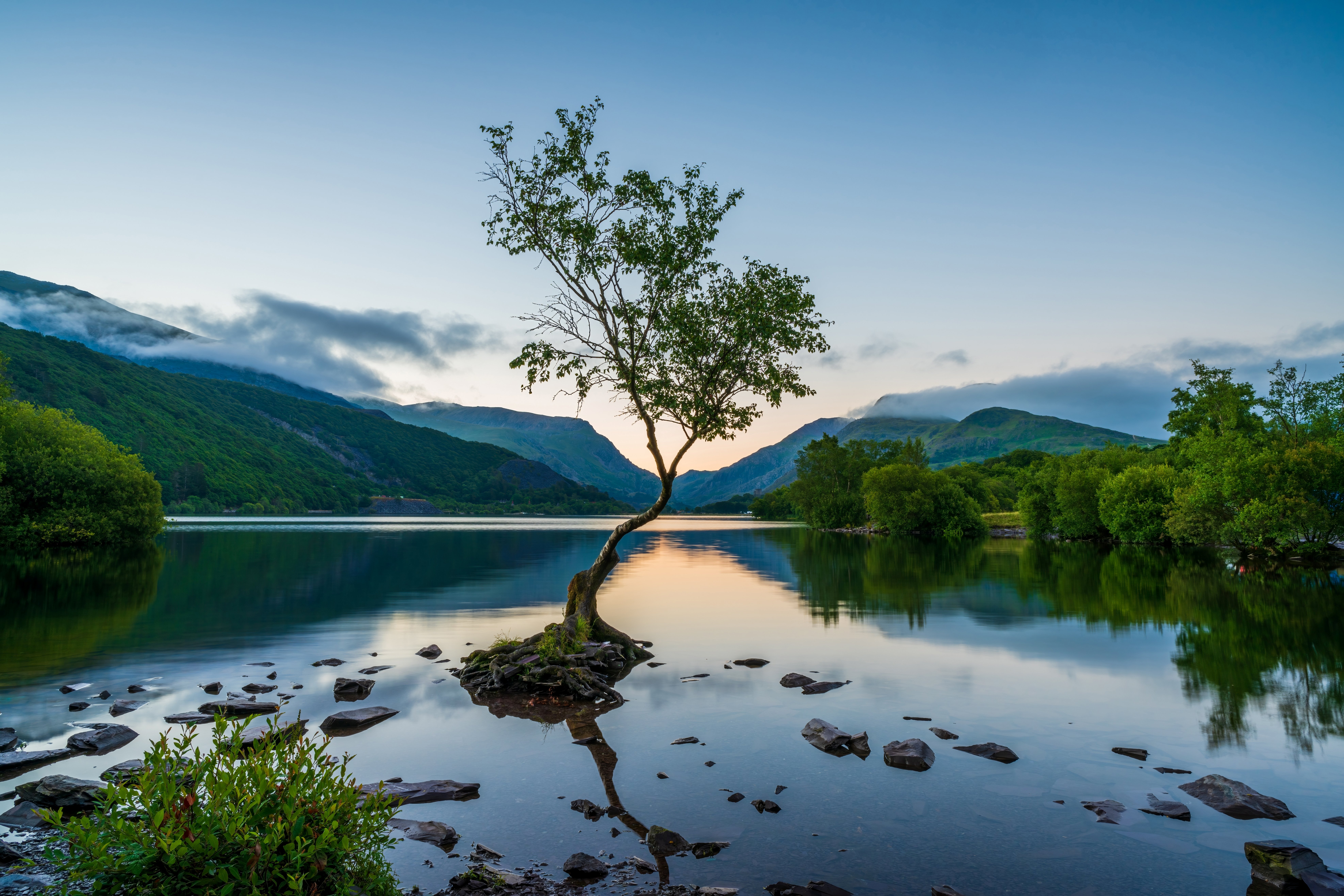
This through-drive crosses the full breadth of Eryri National Park in northwest Wales, threading between 3,000-foot peaks, glacial lakes, and a chain of medieval fortresses built to subdue a kingdom. From the market town of Dolgellau beneath Cadair Idris, the route heads north along the coast to Harlech, then cuts inland through the slate valleys and past the Italianate fantasy of Portmeirion before reaching Beddgelert and the fortress town of Caernarfon. The second half climbs through the dramatic Llanberis Pass, the most spectacular mountain road in Wales, squeezed between Yr Wyddfa and the Glyderau with rock walls rising on both sides. The descent brings you to Betws-y-Coed and on to Conwy, where another of Edward I's castles crouches over the estuary with the mountains rising behind. This is the Welsh-speaking heartland of Wales, where roughly 70% of residents use the language daily and the mountains carry names older than English itself.
Key Stops
Dolgellau and Cadair Idris A handsome market town of over 180 heritage-listed stone buildings, huddled beneath Cadair Idris (893 m). According to Welsh legend, anyone who sleeps on the summit will awaken either a poet or a madman. The Minffordd Path is the most popular ascent route. Dolgellau makes a fine starting base with good accommodation and restaurants.
Harlech Castle (UNESCO World Heritage Site) One of Edward I's Iron Ring fortresses, dramatically perched on a crag with 40-foot walls overlooking the coast and the Llyn Peninsula. It withstood a seven-year siege in the 15th century, inspiring the marching song "Men of Harlech." Entry is approximately £10 per adult.
Ffestiniog Railway and the Slate Landscape (UNESCO World Heritage Site) At Maentwrog the route joins the A487, passing the steam trains and stations of the Ffestiniog Railway, originally built to carry slate from Blaenau Ffestiniog down to the harbor at Porthmadog. The slate quarries of northwest Wales were inscribed as a UNESCO World Heritage Site in 2021, recognizing how they transformed this landscape during the Industrial Revolution.
Portmeirion A short detour from Porthmadog leads to this whimsical Italianate village, designed by architect Sir Clough Williams-Ellis between 1925 and 1975 on a private peninsula above the Dwyryd estuary. Famous as the filming location for the 1960s television series The Prisoner, Portmeirion celebrates its centenary in 2026. Main season entry is £20 per adult.
Beddgelert One of Eryri's prettiest villages, tucked at the meeting of the Glaslyn and Colwyn rivers. The A498 reaches it over the steep and spectacular Aberglaslyn Pass. A riverside path leads to Gelert's Grave, honoring the legendary hound of Prince Llywelyn the Great, killed by his master in a tragic misunderstanding (though the grave was likely the invention of an 18th-century innkeeper keen to attract visitors).
Caernarfon Castle (UNESCO World Heritage Site) The most imposing of Edward I's Iron Ring fortresses, with octagonal towers and banded walls modeled on the defenses of Constantinople. Edward II, the first English Prince of Wales, was born here in 1307, and Charles was invested as Prince of Wales within these walls in 1969. Entry is approximately £14.50 per adult. The four principal Iron Ring castles (Caernarfon, Conwy, Harlech, and Beaumaris) are collectively inscribed as a UNESCO World Heritage Site.
Llanberis The main base town for Yr Wyddfa, home to the Snowdon Mountain Railway (steam and diesel services running March through October, from £45 return), the free National Slate Museum, and Dolbadarn Castle, a native Welsh fortress built by Llywelyn the Great. The Electric Mountain visitor center offers underground tours of the Dinorwig hydroelectric power station hidden inside the mountain.
Llanberis Pass and Pen-y-Pass The A4086 climbs through the most dramatic mountain road in Wales, walled in by rock on both sides as it rises between Yr Wyddfa and the Glyderau. At 359 meters, Pen-y-Pass is the starting trailhead for the Miners' Track and Pyg Track to the summit. Parking requires pre-booking (via JustPark) from late March through November 2026; use the Sherpa bus from Nant Peris Park and Ride instead.
Betws-y-Coed and Swallow Falls The Victorian-era village of Betws-y-Coed sits at the confluence of three rivers in the Gwydir Forest. Two miles west, Swallow Falls (Rhaeadr Ewynnol) is one of Wales's most visited waterfalls, with a viewing platform accessible for £2.
Conwy Castle (UNESCO World Heritage Site) The drive's finale: Edward I's castle crouches over the Conwy estuary with the mountains of Eryri rising behind. The small town is still ringed by its remarkably complete medieval walls, the best preserved in Britain. A Cadw Explorer Pass covers entry to Conwy, Caernarfon, and Harlech if you are visiting all three.
Driving Tips
- The route flows best driven south to north, building from the coastal castles to the mountain passes and finishing at Conwy.
- The Llanberis Pass (A4086) is narrow in places with walled-in sections. Coaches use this road, so be prepared to reverse to passing places.
- Expect sheep on the road throughout the park. They are a genuine and frequent hazard.
- Fuel up in Dolgellau or Caernarfon. Petrol stations are scarce within the park boundaries.
- Use the Sherpa'r Wyddfa bus service (routes S1, S2, S5) to reach Pen-y-Pass rather than driving. Buses run at 15-minute intervals on weekends and school holidays.
- Mobile phone signal is patchy to nonexistent in valleys. Carry a paper map and do not rely solely on phone navigation.
- A Cadw Explorer Pass offers excellent value for visiting multiple castles (unlimited access to 100+ historic sites for 3 or 7 days).
- Cloud and rain can descend rapidly at any time of year. The mountains have a dramatic beauty in mist, but carry waterproofs and check forecasts before setting out.
- All road signs in Wales are bilingual. Yr Wyddfa is the Welsh name for Snowdon; Eryri is the official name for the national park.
- For more information visit: Eryri National Park