RoadDrive
AboutApp StoreSign In / Up

Peru's Northern Drive

Peru's Northern Drive
Lima
Trujillo
Peru
710 km
13h 50m

Ancient Pyramids and Turquoise Waves

Peru's Northern Coast Beach Drive follows the Pan-American Highway north from Lima to Trujillo along one of the most archaeologically rich coastlines in the Americas. This is Peru's "Ceviche Coast" — an arid, sun-baked shoreline where ancient civilisations built mud-brick cities larger than any in the pre-Columbian world, where fishermen still ride reed boats unchanged for 3,000 years, and where the world's longest left-hand wave peels endlessly along a desert point break. The drive traverses a landscape of stark contrasts: bone-dry coastal desert gives way to irrigated green valleys fed by rivers pouring off the distant Andes, and roadside cevicherías serve the freshest seafood on the continent while 5,000-year-old pyramids rise from the sand dunes beside the highway. Between Lima and Trujillo alone, you cross through the territories of at least four great pre-Inca civilisations — Caral, Sechín, Moche, and Chimú — and sample ceviche prepared a dozen different ways. No other coastal drive on Earth packs so much ancient history, world-class surfing, and extraordinary seafood into a single stretch of road.


Key Stops

Lima to Trujillo — The Ancient Coast

Lima - The sprawling capital and starting point. Before departing, visit the historic centre (UNESCO World Heritage), the bohemian Barranco district, and — most importantly — the restaurants of Miraflores where Peruvian coastal cuisine reaches its pinnacle. Lima is widely considered the culinary capital of South America. Fill your tank and depart north on the Panamericana.

Lomas de Ancón National Reserve - About an hour north of Lima, this rare coastal ecosystem supports seasonal vegetation that blooms from fog moisture in an otherwise hyper-arid landscape. Short hiking trails through a unique "fog oasis." A surprising green interlude between desert stretches.

Huacho - Your first seafood stop. This unpretentious coastal town is packed with cevicherías where locals eat. Try El Clásico del Mar or El Coral for your first taste of genuinely fresh northern ceviche — simpler and bolder than Lima's refined versions.

Caral - A detour inland up the Supe Valley to one of the most significant archaeological sites in the Americas. Founded approximately 5,000 years ago, Caral is one of the oldest urban centres in the Western Hemisphere — contemporary with the Egyptian pyramids. Hilltop temples, an amphitheatre, and residential complexes overlook the valley. UNESCO World Heritage Site.

Cerro Sechín - Back on the Pan-American, these pre-Inca ruins feature stone walls carved with graphic warrior and battle scenes dating to around 1600 BC. One of Peru's most striking and unsettling ancient monuments.

Chimbote - A working fishing port with a snug natural harbour — an ideal overnight stop after a long first day. Stroll the Malecón waterfront at dusk, where restaurants like Mar & Luna serve multiple styles of ceviche with live local music. Fine beaches and coastal sand dunes for sandboarding lie nearby.

Cordillera Blanca Detour - From Chimbote or the Sechín area, a spectacular side trip climbs inland to the Cordillera Blanca and Parque Nacional Huascarán. The planet's highest tropical mountain range harbours Peru's tallest peak (Huascarán, 6,768 m), hundreds of glaciers, condors, pumas, spectacled bears, and wild vicuñas. Allow 2-3 extra days if taking this detour.

Trujillo & Surrounds — The Archaeological Heartland

Trujillo - Peru's third-largest city, founded by the Spanish in 1534. The elegant colonial centre features brightly painted mansions, ornate churches, and a vibrant plaza. Trujillo's numerous restaurants are renowned for chinguirito (salted grilled guitarfish), causa seafood casseroles, chupe seafood chowders, and ceviche made from all manner of fish. Schedule your visit to coincide with the Feria Nacional del Queso (cheese and wine festival) in May if possible.

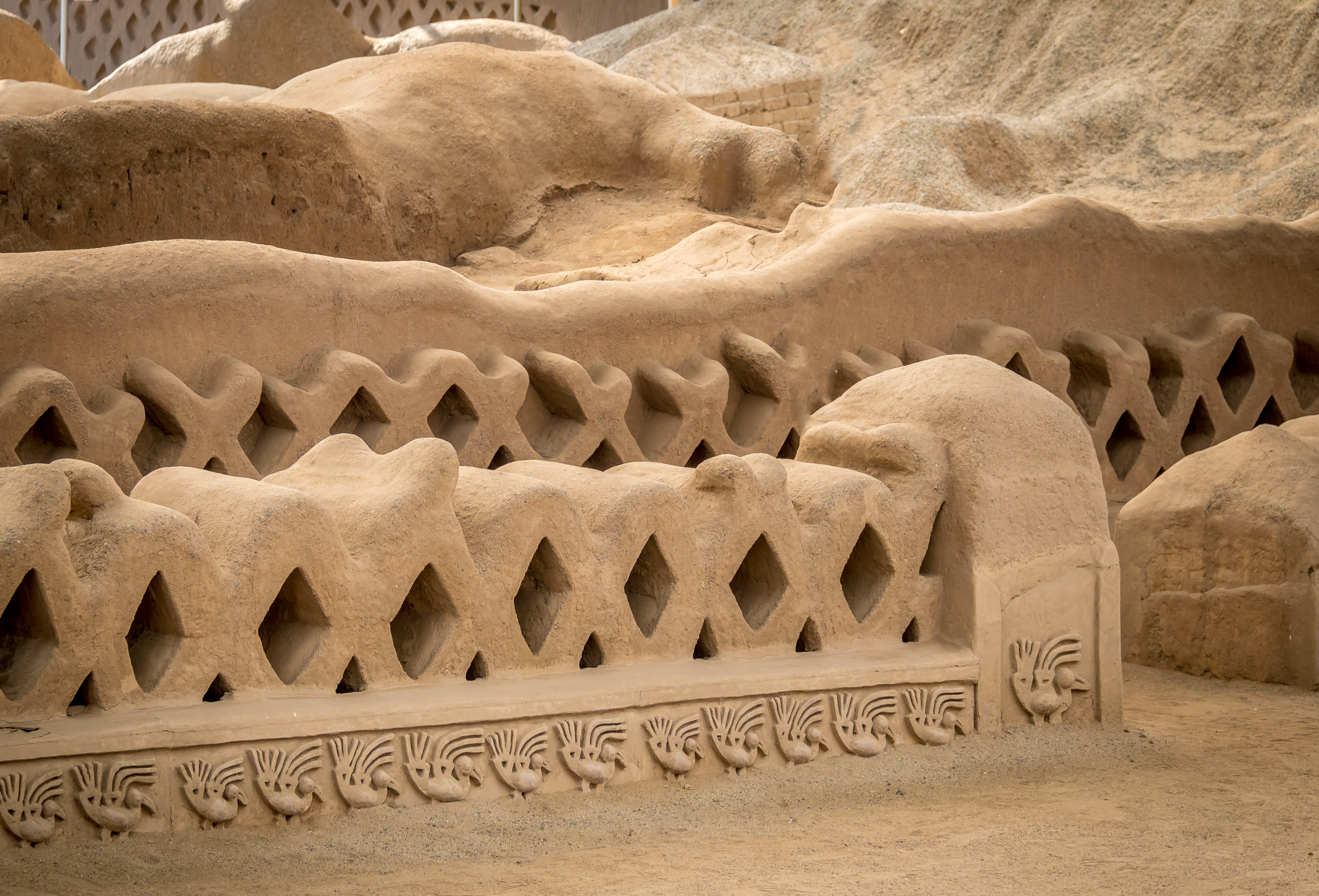
Chan Chan - 5 km west of Trujillo, the largest adobe city ever built and a UNESCO World Heritage Site. Capital of the Chimú Empire (900-1470 AD), this 28 km² complex of palaces, plazas, storerooms, and ceremonial platforms once housed up to 60,000 people. The elaborate carved friezes of fish, birds, and geometric patterns on the mud-brick walls are extraordinary. Nothing else like it exists on Earth.

Huaca de la Luna - South of Trujillo, this Moche civilisation temple (100-800 AD) features brilliantly preserved polychrome murals depicting the fearsome deity Ai Apaec. The adjacent Huaca del Sol was once the largest adobe structure in the Americas.

Huanchaco - The beach town adjacent to Trujillo and one of Peru's most charming coastal villages. Fishermen here still ride caballitos de totora — reed boats shaped like seahorses — an unbroken tradition stretching back 3,000 years to the Moche period. Watch them launch at dawn, then eat ceviche at the beach. A magical place where ancient Peru meets the Pacific surf.

Puerto Chicama - South of Trujillo, home to the longest left-hand wave in the world. On the best days, this legendary point break peels for over 2 km along the desert coastline. Even non-surfers should stop to watch from the cliff above. The wave draws international surfers year-round, with the best conditions from March to June.


Driving Tips

  • Police checkpoints: Expect regular checkpoints along the Panamericana. Keep your passport, driver's licence, and rental documents easily accessible. Remain calm and polite.
  • Fuel: Fuel stations are frequent along the Pan-American through major towns. Fill up in Lima, Huacho, Chimbote, and Trujillo.
  • Duration: Do not attempt the full 595 km as a single-day drive. Plan 3-5 days with an overnight in Huacho or Chimbote, and 2 nights in Trujillo to properly explore Chan Chan, the Huacas, Huanchaco, and Chicama.
  • Cash: Carry Peruvian soles. Archaeological sites and smaller town restaurants often accept cash only. ATMs are available in Lima, Chimbote, and Trujillo.
  • Ceviche timing: Peruvians eat ceviche for lunch, never dinner. The best cevicherías close by mid-afternoon. Plan your seafood stops accordingly — this is not tourist snobbery, it's about freshness.
  • Surf season: Chicama's legendary wave is best from March to June. Huanchaco works year-round.
  • For more information visit: peru.travel

Waypoints (10)

☰
1
Lima Main Square
⛰️ 102 m
23 km
40m
☰
2
Cevichería El Coral Huacho
⛰️ 139 m
120 km
1h 57m
☰
3
Caral
⛰️ 592 m
249 km
4h 0m
☰
4
Cerro Sechin
⛰️ 130 m
68 km
1h 30m
☰
5
Malecon Waterfront, Chimbote
⛰️ 0 m
130 km
2h 33m
☰
6
Trujillo
⛰️ 195 m
15 km
37m
☰
7
Chan Chan
⛰️ -41 m
8 km
20m
☰
8
Huaca de la Luna
⛰️ 195 m
59 km
1h 25m
☰
9
Huanchaco
⛰️ 0 m
37 km
45m
☰
10
Puerto Malabrigo (Puerto Chicama)
⛰️ 46 m