Oslo to Bergen over Hardangervidda
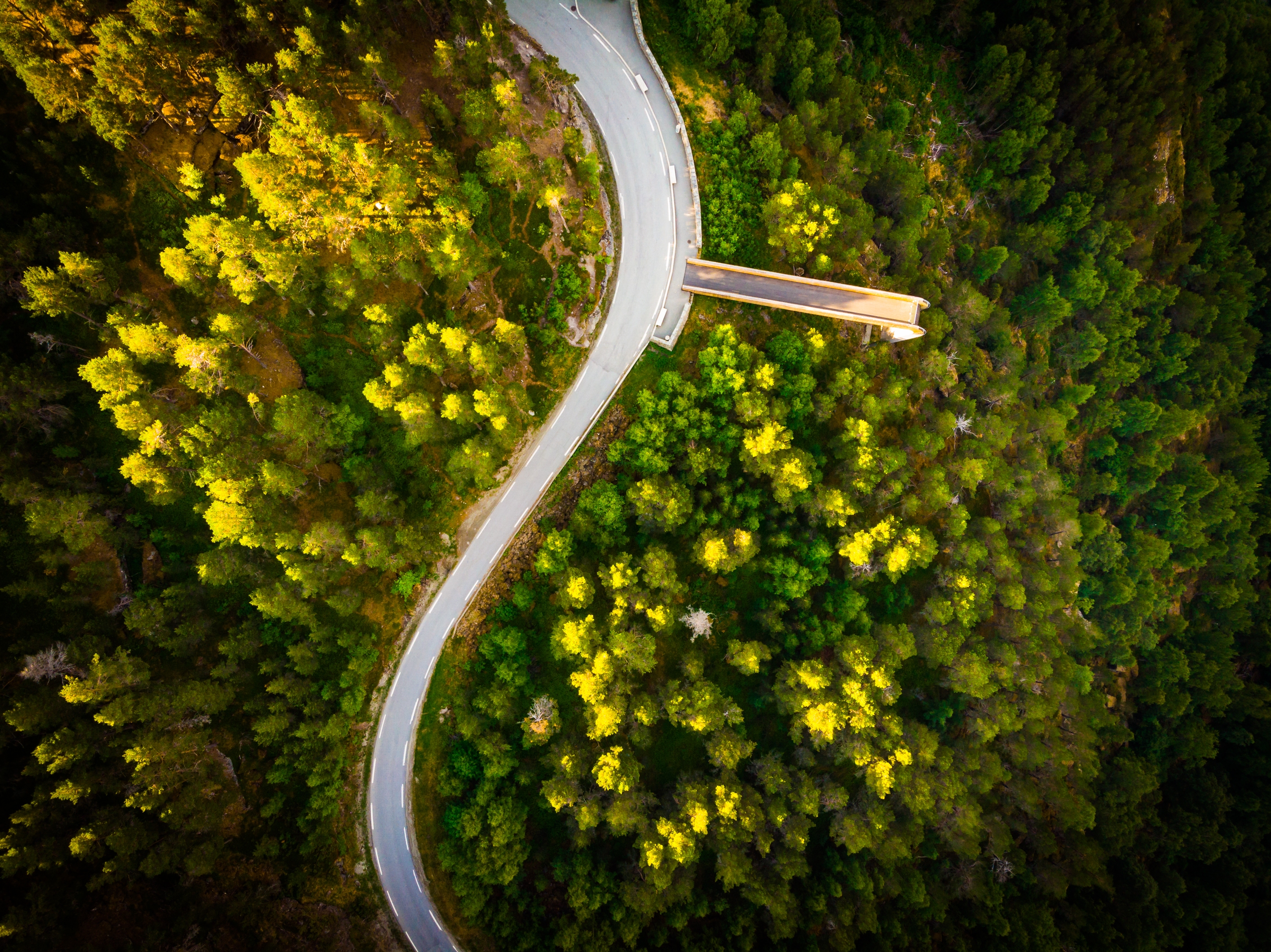
Capital to Coast Across the Roof of Norway
This is the great Norwegian traverse: from the capital, up the long farm-and-forest corridor of the Hallingdal valley, over Hardangervidda, northern Europe's largest high-mountain plateau, and down through waterfall country to the Hardangerfjord and Bergen. The plateau is the drive's wild heart: a treeless arctic tableland holding mainland Norway's biggest national park and Europe's largest wild reindeer herds, crossed by a road that in winter runs behind snowplows in convoy. At its western rim the landscape gives way all at once, as Norway's most famous waterfall, Vøringsfossen, hurls itself 145 meters into a gorge and the road spirals down the Måbødalen canyon to sea level, where the fjord's orchards bloom and cider farms carry their own protected designation of origin, like a wine appellation. The mountain section between Haugastøl and Eidfjord is an officially designated Norwegian Scenic Route, as are the fjord roads beyond the bridge, and the trip ends in the UNESCO-listed Hanseatic harbor of Bergen. Driven in May, the route can hold three seasons in an afternoon: spring in Hallingdal, snowdrifts on the vidda, and blossom at the fjord.
Key Stops
Oslo. Depart the capital westward on the E16. If you have an hour to spare first, the original 13th-century Gol stave church stands re-erected at the Norsk Folkemuseum, a preview of the valley architecture ahead.
Krøderen and the lower Hallingdal. Beyond Hønefoss the Rv7 begins, skirting the long lake of Krøderen beneath the Norefjell massif, then settling into Hallingdal, one of Norway's major mountain valleys, where farms climb the slopes and the river braids below the road.
Torpo stave church. The valley's treasure, easy to miss beside the main road between Nesbyen and Ål: a genuine 13th-century stave church, the oldest building in Hallingdal, sheltering a vividly painted medieval ceiling canopy. Open in summer, small, and worth every minute of the stop.
Geilo. A year-round mountain resort at the valley's head and the natural first overnight from Oslo. Last full services (fuel, chargers, supermarkets) before the plateau, and positioned to put you on the vidda in morning light.
Haugastøl. Where the officially designated scenic stretch begins. This is also kilometer zero of the Rallarvegen, the historic navvies' construction road along the Bergen railway, now Norway's most popular long-distance bike ride, and the jump-off toward Finse, the rail-only outpost beneath the Hardangerjøkulen glacier where the ice-planet scenes of The Empire Strikes Back were filmed.
The Hardangervidda crossing. For some 40 km the road rolls across open tundra above 1,100 meters, past the mountain lodges at Halne and Dyranut, with trailheads striking off into the national park. Watch the horizon for wild reindeer, stop for waffles at a lodge, and note the snow stakes and emergency shelters that hint at what this road is in January.
Vøringsfossen. Norway's best-known waterfall, plunging 145 meters in free fall (182 in total) into the head of the Måbødalen gorge. Architect-designed platforms and the celebrated 99-step bridge across the gorge lip give safe, spectacular vantage points; the historic Fossli Hotel viewpoint adds the classic angle. Allow a full hour for the walkway loops.
Måbødalen. The descent is a set piece in itself: the road corkscrews down the canyon through spiral tunnels, dropping from mountain to fjord level in a few kilometers, with the old road preserved as a walking and cycling path.
Eidfjord and Kjeåsen. A trim village where the gorge meets the innermost Hardangerfjord, home to the excellent Norwegian Nature Centre Hardanger and the drive's classic side trip: the single-lane road up Simadalen to Kjeåsen, often called the world's most inaccessible farm, perched 600 meters above the water. The village doubles as a cruise port, so its tempo depends on the day's ships.
The Hardanger Bridge. Crossing the fjord on Norway's longest suspension span at 1,380 meters, with tunnels boring straight into the mountainsides at both ends. It replaced a century of ferries in 2013; admire it from the fjordside rest areas before you cross.
Ulvik (detour). A short loop off the main road reaches this amphitheater of orchards at the head of its own fjord branch, the heart of the Hardanger cider revival, with farm tastings, a cider trail, and the poetry center devoted to orchardist-poet Olav H. Hauge.
The fjordside road to Norheimsund. West of the bridge the Fv7 hugs the northern shore beneath 1,000-meter walls, crossing the mouth of the wild Fyksesund on a slender 1937 suspension bridge, with the Folgefonna icefields gleaming across the water. The reward at Norheimsund is Steinsdalsfossen, the waterfall you can walk behind dry-shod.
Tokagjelet and Bergen. The final act climbs out of Norheimsund through the Tokagjelet gorge, where the road clings to the cliff through a chain of rough-hewn tunnels, before joining the E16 and dropping into Bergen. Finish at Bryggen, the UNESCO-listed Hanseatic wharf, with the fish market and the Fløibanen funicular a few minutes' walk away.
Driving Tips
There are no services on the plateau. Between Geilo and Eidfjord you'll find seasonal lodges but no fuel stations or shops. Fill up and stock up at either end.
Plan the Kjeåsen road before you drive it. The single-lane road runs on timed one-way intervals (posted in Eidfjord and at the base) and is unsuitable for large motorhomes. Don't attempt it against the flow.
Come in mid-May for blossom, autumn for cider. The fjord orchards flower spectacularly around mid-May, and harvest brings farm-gate cider. Norway's drink-drive limit is effectively zero (0.02 percent), so assign a designated driver for tastings or buy bottles for later.
Budget for tolls, all electronic. Oslo's toll ring, several tunnels, and the Hardanger Bridge bill automatically via AutoPASS, and rental cars pass charges through. No cash needed anywhere.
Pack for three climates. Oslo can be 25°C, the plateau near freezing, and Bergen raining, all on the same July day. Fog on the vidda can also erase Vøringsfossen's views; if the forecast is poor, flip your overnight plan and cross earlier or later.
Time Eidfjord around the cruise ships. On big ship days the village and Vøringsfossen's platforms fill by mid-morning. The waterfall at 8 am, before the buses climb, is a different experience.
Expect cyclists. Rallarvegen riders join near Haugastøl and touring cyclists work the fjord roads all summer. Pass wide and patiently, especially in the Tokagjelet tunnels.
For more information visit: Norwegian Scenic Routes: Hardangervidda